
From 1st October 2019, HMRC is introducing a new VAT regime for the construction industry, as part of their programme of combatting VAT fraud.
This will have major consequences for both contractors and subcontractors.
This new VAT regime will be a reverse charge, which will cover more than just construction services, and action will need to be taken from everyone within the Construction Industry Scheme.
The reverse charge will mean that the supplier (subcontractor) no longer charges VAT to the customer (contractor), but the customer “self-accounts” for the VAT due.

So how does it work?
 Under the exisitng VAT rules, Subbie Limited is invoicing Developer Limited for £1,000 of standard rated work.
Subbie Limited raised an invoice for £1,000 plus VAT at 20% of £200, total £1,200.
Developer Limited would have then paid £1,200 to Subbie Limited.
Subbie Limited would pay £200 over to HMRC in its next VAT return.
Developer Limited would reclaim £200 from HMRC on it’s next VAT return.
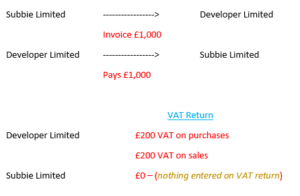
Under the new VAT reverse charge rules, Subbie Limited will raise an invoice for £1,000 with a note to indicate that VAT at 20% of £200 should be declared by Developer Limited.
Developer Limited will then pay the £200 over to HMRC in its next VAT return, but also reclaim £200 from HMRC, giving a zero net effect.
There is no provision to “opt out of the regime” or obtain any form of exemption certificate from HMRC.
However, the new regime will not apply where:
- Services are supplied to the end user, such as the property owner, or directly to a main contractor that sells a newly completed building to the customer;
- The recipient makes onward supplies of those construction services to a connected company;
- The supplier and recipient are landlord and tenant or vice versa, or
- The supplies are zero-rated.
How will it affect contractors?
When the new regime was first announced, it was generally seen as good news by many contractors, as they would no longer have to fund the VAT cost of construction services while they were waiting for HMRC to make repayments.
Contractors will need to ensure their systems are up-to-date and accurate to account for the new reverse charge, and to make ongoing checks to ensure that supplies and purchases are correctly treated.
Contractors need to decide which rate of VAT to apply to particular types of construction services.
Where the Contractor is the “end user”, they are required to provide their subcontractor with confirmation of end user status, at which point the subcontractor accounts for VAT under the normal rules. However, if the end user fails to issue the formal confirmation, they become responsible for accounting for the domestic reverse charge.
How will it affect subcontractors?
For many subcontractors, the new regime will result in a potentially serious cash flow issue. As they will no longer be charging VAT on their supplies, subcontractors will be unable to use the VAT they collect from customers as working capital before they pay it over to HMRC.
Traditionally, subcontractors large and small have used the VAT they are paid by customers as short-term working capital to fund their business.
With source of funds no longer available to them, many businesses are facing some difficult choices about funding their operations after 1st October.
What actions should be taken?
Construction businesses should:
- Review supplies made to and received from other VAT registered contractors to establish whether these will be subject to a reverse charge from 1st October;
- Consider the adaptions that will need to be made to their accounting systems to deal with this change and;
- Consider the impact on their cash flow from 1st October, and if there are any other ways to mitigate this impact.
For further information, HMRC have released guidance on the changes, which can be found at; https://www.gov.uk/guidance/vat-domestic-reverse-charge-for-building-and-construction-services
Additionally, contact us to discuss how this is going to affect your business.